

After studying Food Engineering at Hacettepe University, you have held responsibilities in quality assurance, food safety and quality systems management across different food sectors for about 13 years. Which of the experiences you gained in businesses with different production technologies shaped your current science-based approach to quality management the most?
I would say my professional development began in my university years. As a scholarship student, I did an internship every summer, which gave me the chance to get to know different processes. Working side by side with people on the production floor was especially instructive for me. Seeing how an operation is described on paper and how it is actually carried out on the floor laid the foundation of the perspective I still hold today.
Of my roughly 13 years in the food sector, 10 were spent in poultry slaughtering, further-processed products and eggs; about a year and a half in vinegar and pickle production; and one year in consulting and audit work. In the seven years at my first workplace, I was involved in many processes, from process control to customer complaints and from quality systems to supplier audits.
One of the things that made me grow quickly was that the experienced people I expected to learn the job from left, and early on I had to take on responsibility on my own. I moved forward by researching, asking questions and looking for solutions on the floor. The opportunity to work with British auditors who came for McDonald's audits, together with the supplier audits I carried out, gave me a different discipline of questioning.
In later years I focused on team and system management. Today I know that knowing the standards is important; but it is not easy to build effective quality management without understanding the production and the people to which those standards are applied.
Throughout your career you have worked with management systems such as ISO 9001, ISO 22000, FSSC 22000 and BRCGS. Besides managing existing systems, you have also taken responsibility for system development, restructuring and transitions to new standards. What have these experiences taught you about building an effective quality and food safety system?
In the early part of my career I worked in businesses where ISO 9001 and ISO 22000 systems were maintained. In later years I also gained experience with FSSC 22000 and BRCGS requirements. My responsibilities expanded from maintaining the existing system to developing it, and to managing transitions to new standards and site audits. At my second workplace we went through a process in which we largely rebuilt the quality and food safety management system.
That experience taught me this: building a system does not mean first preparing the documents and then asking employees to comply with them. You first need to understand the product, the process, the hazards, the workflow and the real conditions of the business. The requirements of the standards must of course be met; but the solution must also be workable on the floor.
Another important point is the involvement of process owners in the system. When you create procedures together with production, maintenance, R&D and the other relevant teams, you don’t just build a more realistic system; you also make it easier for people to understand why they apply it and to take ownership of it. For me, the measure of a good system is not the number of documents but how effectively it manages risks in day-to-day operations.
You have managed large quality teams at different sites. In your view, what is the difference between being a quality manager and being a quality leader? What kind of leadership approach do you adopt to involve teams in solving problems, develop employee competence and build a sense of shared responsibility?
I don’t think quality management and quality leadership are opposites; a quality manager can also be a very good leader. The difference shows in how we approach a problem. There is an important difference between simply monitoring whether rules are followed and asking “Who did this?” when there is a nonconformity, and asking “Why did this happen, and how can we prevent it from happening again?”
When I see an error, I make a point of listening to the employee, observing the process on site and involving the relevant people in the solution. Behind the visible error there may be unsuitable equipment, a complicated workflow, insufficient space or production pressure as much as a lack of training. Brainstorming and root cause studies help different teams notice details the others do not see.
Of course, this approach does not remove responsibility. If there is a food safety risk, the product and the process must be secured first. Then you develop the permanent solution together and monitor its implementation and effectiveness.
For me, leadership is not only telling people what to do; it is explaining why, hearing their views and creating the conditions in which they can sustain the right practices.
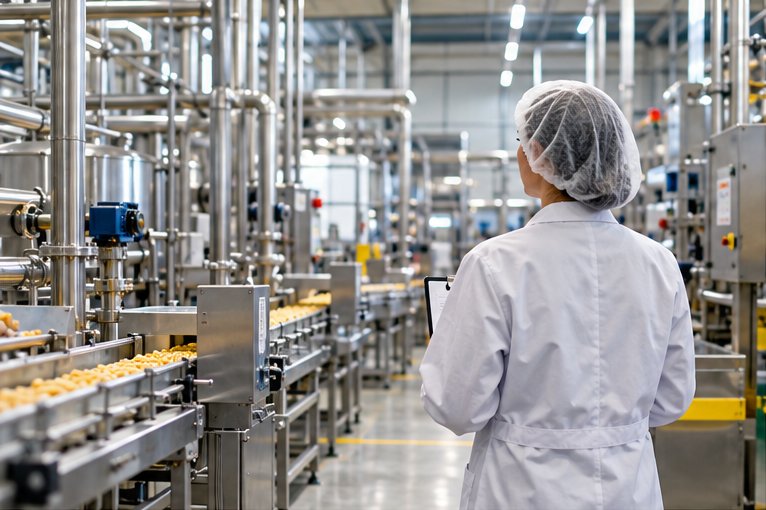
In food businesses, quality and food safety activities are sometimes seen as processes that slow down production or add cost. How does top management’s view of quality affect a company’s food safety culture? Why does it matter that managers set an example in following the rules?
Top management largely sets the direction of food safety culture. If success in a business is discussed only in terms of how much is produced, how much is sold and how quickly goods are shipped, quality processes can over time come to be seen as a cost that slows production down. Yet nonconforming product, rework, returns, recalls, the risk of harming consumer health and loss of reputation also have serious consequences. Alongside the resources spent on quality, we need to see the value of the risks that are prevented.
Top management’s influence is not limited to the budget; its behavior is decisive too. For example, if the risk assessment requires hairnets, masks or suitable footwear in a production area, managers and visitors entering the same area must follow the same rules. If a rule is relaxed when the owner or an important visitor arrives, what message are we giving employees?
In my view, employees take as their example not only what they hear in training but also the everyday behavior of their managers. Whether food safety is a real priority shows in the stance management takes on a difficult production decision, a resource need or the enforcement of a rule. Rules must be applied according to risks, not according to people.
Does certification to an international food safety standard show that the system is really being applied effectively on the floor? How can we tell a business that meets the requirements during audit periods from one that has turned food safety into its everyday working culture?
Certification is an important and valuable assessment mechanism; but on its own it is not a guarantee that all risks in a business are under control at every moment. There is a difference between meeting the requirements of a standard and applying those requirements with the same determination every day.
In some businesses we see intensive preparation as an audit approaches. Procedures are reviewed, gaps are closed, more checks are carried out on the floor. Yet the real strength of a system shows not on audit days but on an ordinary production day. Are the same hygiene rules applied when there is no audit? Do employees know why they carry out the checks they do? When there is a deviation, can the right decision be made despite production pressure?
When I assess such a system, I look at whether the records and the practice on the floor are consistent, at how things work across different shifts, at interviews with employees, at the root causes of nonconformities and at the effectiveness of the actions taken. A check being ticked on a form is not the same as it actually being done correctly.
For me, a food safety certificate is not the ultimate goal to be reached; it is the result of independent audits confirming a management system that is applied effectively on the floor all year round.
“For me, a food safety certificate is not the ultimate goal to be reached; it is the result of independent audits confirming a management system that is applied effectively on the floor all year round.”— Merve Göksüner
When food safety systems are seen as the responsibility of the quality department alone, other departments may not take enough ownership of the process. Why is the active involvement of units such as production, maintenance, R&D, purchasing, warehousing and shipping in HACCP work important? How does building hazard analyses and process flows together affect ownership of the system?
When food safety is left to the quality department alone, a “quality will take care of it” mindset can settle into the other units. Quality then writes the procedures, runs the audit preparations and tries to solve nonconformities on its own. Yet product safety is affected by every decision the business makes.
That is why I attach great importance to a HACCP team that is genuinely effective. The team should not be just a list of names and signed meeting minutes. We should build the process flow together with the people who know production, verify it on the floor and carry out hazard analyses with the input of the relevant expertise.
Production can bring to the table the real operation and the conditions under which deviations occur; maintenance, hazards arising from equipment and infrastructure; purchasing, raw material and supplier risks; R&D, product and process changes; and the warehousing and shipping teams, storage and distribution conditions. Support from human resources in terms of training, competence and employee onboarding is also valuable.
A study prepared together does more than provide a more comprehensive risk assessment. Each unit begins to see the impact of its own activities on food safety and to take responsibility. Of course, the results of the team’s work need to be put into practice, reviewed and supported by management. In my view, real ownership begins when we build the system together.
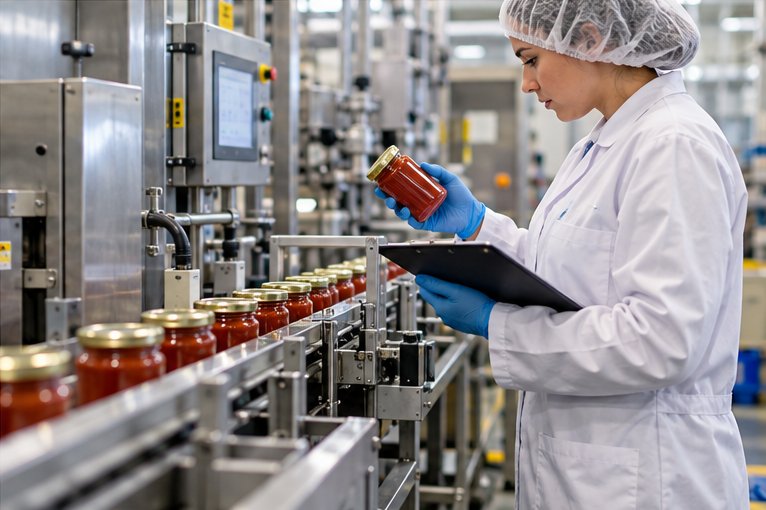
Even though businesses provide regular hygiene and food safety training, they may still face problems with employees’ compliance with the rules. Is this only a matter of lacking knowledge, or are employees’ habits, managers’ behavior, production pressure and physical working conditions also decisive?
It would not be right to explain it with a single reason. Employees may differ in educational background, literacy level and ways of learning. So we cannot assume that the same training attended by everyone is understood at the same level by everyone. But sometimes an employee knows the rule and understands the reason for it, and still behaves differently once on the floor.
Because someone new to the job who sees their supervisor or experienced coworkers not following a rule in production may follow their example. Over time, what becomes decisive is not what was taught in training but the behavior accepted as normal in the working environment. That is why management’s attitude, habits and the role models within the team matter.
Then there is the effect of conditions. Inadequate equipment, difficulties in the workflow, an unsuitable physical space or high production pressure can make the right practice harder. In such cases, repeating the same training may not be a solution on its own.
So alongside the question “Was training given?” we also need to ask “What did the employee understand, what do they see on the floor, and are they able to carry out the right behavior?” Turning knowledge into habit is closely linked to working culture.
What approach should be taken so that employee training turns into real behavioral change? How do you assess the contribution of visual, hands-on training on the floor, both to raising employee awareness and to identifying the conditions that make rules hard to apply?
We cannot measure the impact of training with an attendance form alone. We need to look at whether the employee has understood the information and whether they apply it at their workstation. That is why I believe short, clear, visual and hands-on training carried out on the real process is very valuable.
For example, if a need for training was identified in the root cause analysis after a customer complaint, or if we want to refresh existing knowledge, we can work with the employees concerned directly on the production floor. Showing the equipment, the product flow and the critical points on site makes the explanation concrete and also makes it easier for employees to ask questions.
For me this method has a second value as well: we learn during the training too. We can see directly on the floor at which step the employee struggles, why an instruction cannot be followed, or a physical obstacle that makes the task harder. We can then assess this together with the employee and look for a workable solution.
Of course, training is not the answer to every problem. If the problem stems from equipment, infrastructure or work organization, that is where the main intervention should be made. Whether the training worked also needs to be verified through later observations on the floor and the continuity of the practice. Effective training not only explains what is right but also makes visible the obstacles to doing what is right.
When a customer complaint or nonconformity occurs, the first step is often to look for who caused the error. Yet behind problems there may be causes rooted in equipment, workflow, infrastructure or organization. What approach should be followed to reach the real root causes and develop lasting corrective actions? Could you share examples from the field?
In a nonconformity, I prefer to observe the process before focusing on the person. Because behind what looks like employee error, there can sometimes be a systemic cause.
Take a complaint about product weight, for example. The first reflex might be to find out which employee did the weighing. But when we go to the weighing area and watch the process, we may notice that the scale has been placed in a very narrow spot, where it can come into contact with the surrounding packaging. Whether this contact affects the measurement must of course be tested; but blaming the employee without seeing such a possibility would not be the right approach.
Similarly, if we ban phones in the production area without giving employees a place to leave their belongings safely, we make the rule harder to follow. Or if a double-door airlock that should stay closed is not designed for the handling equipment, employees may end up leaving the door open during operations.
These are examples describing situations that can be encountered on the floor. In each case, product and process safety must be secured first, and then the root cause verified through observation on the floor and the input of the relevant teams. Rather than closing the solution only on paper, it is important to implement it and monitor whether the problem recurs.
Before asking why a rule is not followed, we should also ask whether that rule can actually be followed.
“Before asking why a rule is not followed, we should also ask whether that rule can actually be followed.”— Merve Göksüner
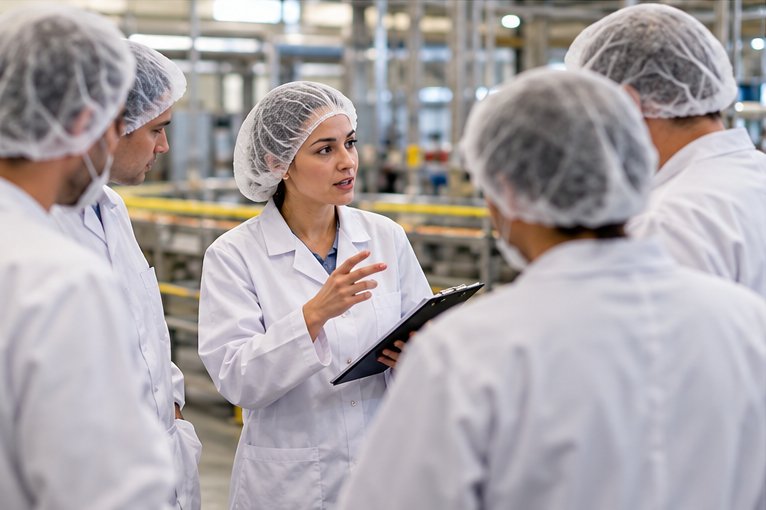
Besides quality management, you also have experience in supplier audits and independent auditing. Do the certificates a business holds provide sufficient assurance in terms of food safety? What should audits pay attention to in order to assess real production conditions, process capability and the sustainability of the system?
A certificate shows that a business has been assessed against the requirements of a particular standard, and it is an important element of assurance. But when working with a new supplier or assessing the effectiveness of an existing system, it should not be considered sufficient on its own. You also need to understand the risks specific to the product, the process and the supply chain.
During audits, particularly in some small businesses, I came across a striking situation: consulting services had been bought and HACCP plans and procedures prepared, but the documents dated back years and had not been updated to reflect changes in production. In such a case, even if a system exists on paper, one has to question how far it reflects the current processes and the real conditions on the floor.
The problem here is not getting consulting support; it is reducing the consulting service to the delivery of ready-made paperwork and the business not owning the system and keeping it alive. The goal of both the consultant and the business should be not just documents to show at an audit, but an up-to-date structure that employees understand and can apply.
For me, a good audit begins with understanding the process. I assess raw material receiving, process controls, cleaning and hygiene practices, traceability, the management of nonconforming product and shipping conditions in relation to one another. I want to see not only that a procedure exists but how it is applied on the floor, what employees do in the event of a deviation and whether the records match actual practice.
Supplier audits gave me the opportunity to get to know different production technologies and to see that the same standard can correspond to different risks in different businesses. That is why I do not see an audit as merely filling in a checklist. Verifying whether the action taken after a nonconformity is closed was really effective is just as important. In my view, a good audit should help a business assess itself more accurately and improve its system.
You have held quality assurance and food safety management responsibilities in different sectors such as poultry meat, eggs, further-processed products and fermented foods. What has assessing the process and product safety risks specific to these sectors added to your approach to quality management? Why is it important for businesses to correctly identify the risks specific to their products and processes?
Working with different product groups showed me that there can be no one-size-fits-all solution in food safety. The basic approach must be risk-based; but the source of the risk and the control method vary with the characteristics of the product and the process.
In poultry meat production, for example, infectious diseases, antibiotic residues, microbiological hazards, preventing cross-contamination, process hygiene and temperature management come to the fore. In further-processed products, additives whose use is restricted depending on the nature of the product, heat treatment, the separation of raw and cooked areas, packaging and storage conditions can be critical. In products such as vinegar and pickles, managing fermentation, pH, acidity, microbiological stability and packaging integrity call for a different control approach.
This diversity also explains why hazard analysis cannot be reduced to a ready-made template taken from another site. We need to assess raw material characteristics, process flow, equipment, the target consumer and the product’s conditions of use together.
Working at different sites has helped me consider not only the outcome but the product and the process as a whole when looking at a nonconformity. Standards provide a common framework; but proper risk management begins with understanding the real conditions on the floor.
Finally, how do you see the future of food safety management in Türkiye? Which areas should businesses develop first in the coming years? What role can training, auditing and consulting play in this transformation?
I think the food sector in Türkiye has strong technical know-how and substantial production experience. But the maturity of quality and food safety systems can vary considerably depending on a company’s size, its human resources and management’s priorities. In my own observation, specialization and systematic management can be stronger in large companies; resource constraints become more pronounced in medium-sized ones, and the difficulties in this area can grow even further in small businesses. There are exceptions, of course; size alone does not guarantee food safety.
I think this difference is not only about headcount; it also shows in the meaning attached to certification. Especially in large, institutionalized companies, quality and food safety can be embraced more as an important part of protecting consumer trust and brand reputation, of sustainable growth and of staying in the market. In some medium-sized and small businesses, on the other hand, certification can be reduced to a condition to be met in order to satisfy customer demands or to sell products in certain markets. When that happens, the priority can become getting the certificate and passing the audit rather than really improving the system. Yet even if certification is needed for market access, the purpose of food safety is not just to meet a commercial requirement but to protect the consumer every day.
We can see this difference in staffing too. In the examples I have experienced, a large company’s quality organization might employ a total of 60 white- and blue-collar staff, while in a medium-sized company this number can fall to about 10, and in some small businesses to one or two people. These are not sector averages but examples of structures I have encountered at different scales. Trying to carry the same legislation and food safety responsibility with a much more limited team creates difficulties, especially in terms of specialization, follow-up on the floor and keeping the system up to date.
The acquisition of the last company I worked for by a German company, and the opportunity to see how things work in Germany, also made me think about these differences. In the structure I observed, different topics were assigned to the expertise and responsibility of specific people and coordinated through central quality management. Similar models can be seen in Türkiye too, especially in international companies. But in many businesses, a limited number of quality staff are expected to take on most of the system management, floor checks, audits, complaints and improvement activities at the same time. So the issue is not only headcount; it is distributing tasks properly, developing expertise and providing sufficient resources.
Another problem is finding skilled intermediate staff, experienced operators and technical personnel, and being able to retain them. An intense production pace, demanding working conditions and employees’ changing expectations can affect staff turnover and the onboarding of new employees. Rather than assessing this only in terms of employees’ resilience, we should also think about improving working conditions and strengthening on-the-job training and the transfer of institutional knowledge.
The pressure created by economic conditions can deepen all of these problems. When a decision is made to cut costs, the quality and food safety budget can be one of the first areas to be cut in some businesses. Yet unplanned savings on qualified staff, maintenance, hygiene infrastructure, analyses, supplier controls and training can lead to greater risks and losses.
Raw material costs and price pressure can also increase the risk of turning to supply sources that have not been adequately verified. Weakening control mechanisms can make it harder to detect not only food safety problems but also deliberate attempts at counterfeiting and adulteration. I would particularly like to stress that counterfeiting and adulteration are deliberate acts carried out for economic gain, and that economic difficulties do not justify them. This is why supplier assessment, raw material verification, traceability and the management of food fraud risks must not be neglected.
I believe the solution starts with no longer seeing food safety as the responsibility of the quality department alone. Top management must provide resources; every department must own the risks in its own processes. Hands-on training on the floor, effective HACCP teams, root cause analyses and risk-focused audits can strengthen this approach. Consulting, too, needs to help a business understand its own risks and sustain its system, rather than supplying ready-made documents.
In the end, what we produce is food that people eat. However difficult economic conditions may be, protecting human health cannot be seen as a cost item that can be postponed. Food safety is the shared responsibility of the entire business.