Turnkey laboratory
An integrated set-up approach covering everything needed to make a laboratory operational, from space and sample flow to instrument selection, technical infrastructure and user training.
Read the related answer ↑A venture born of more than 25 years of experience in food and laboratory technologies. We spoke with Didem Kaya, co-founder of Trademorph and a food engineer with a master’s degree, about turning laboratory investments into real value, brand-independent technical consultancy, business development work on the Türkiye–Canada line and her data analytics goals.
The real need was to turn the technical investment into a system that genuinely works and creates value.
The figures, examples and future goals are based on the statements of the guest, Didem Kaya.
A venture born of more than 25 years of experience in food and laboratory technologies. We spoke with Didem Kaya, co-founder of Trademorph and a food engineer with a master’s degree, about turning laboratory investments into real value, brand-independent technical consultancy, business development work on the Türkiye–Canada line and her data analytics goals.
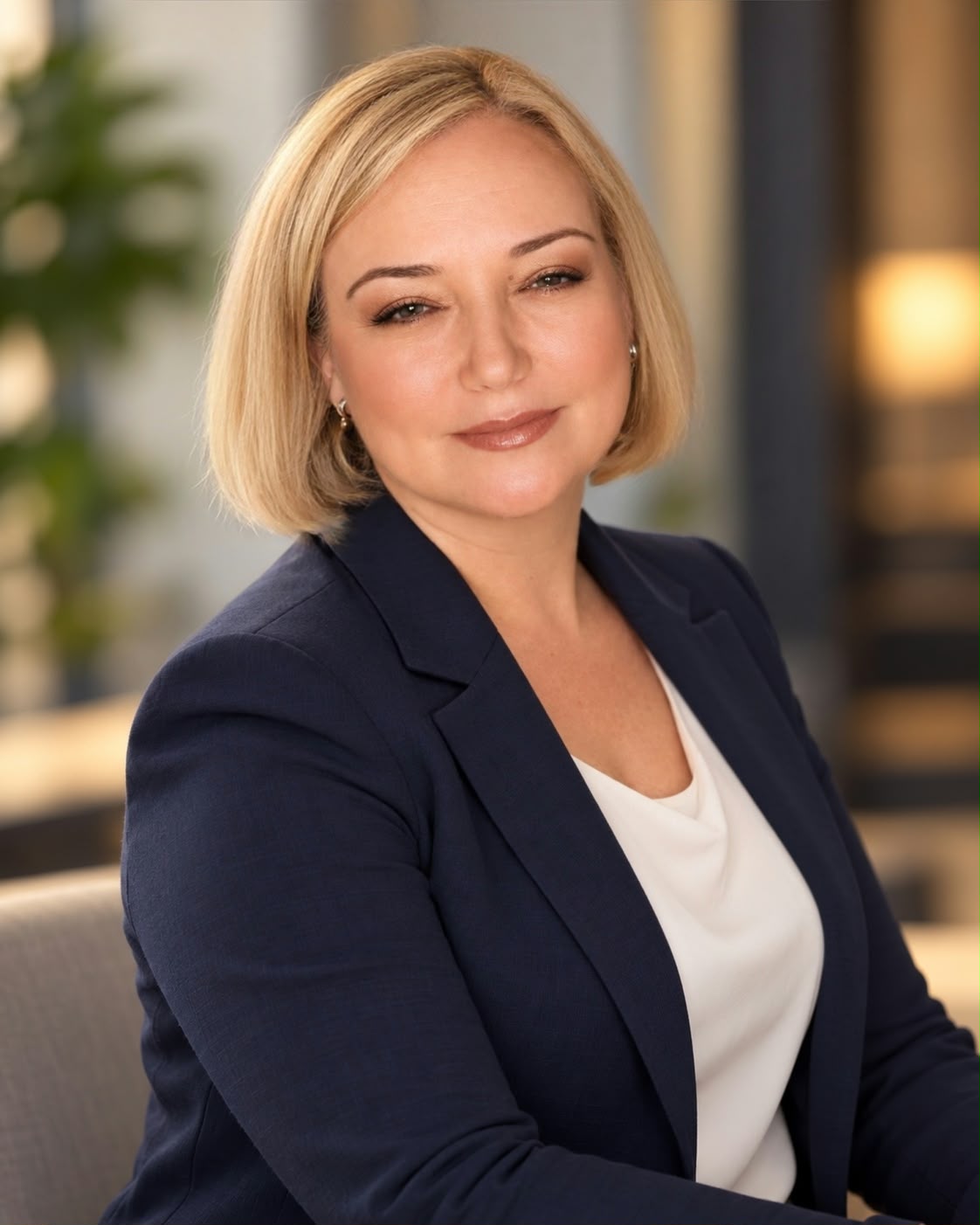
As a food engineer with a master’s degree, I have more than 25 years of experience in the food and pharmaceutical sectors. Throughout my career I worked both as a sales engineer and as a technical sales manager. I was involved in different stages of the process — from understanding the customer’s need and defining the right technical solution to sales, application and business development.
Over those years I observed the problems faced by manufacturers, laboratories and technology providers from both a technical and a commercial angle. In time I saw that traditional company structures struggle to keep up with today’s pace, technical complexity and changing customer expectations. Heavy structures that try to keep every area of expertise in-house narrow their own room for manoeuvre. On the other side, companies with strong technical know-how can struggle to turn it into the right market and into sustainable commercial results.
I set up Trademorph to build a bridge between these needs. Trademorph is not a classic sales company or a conventional distributor. It works as an agile business platform that brings together a scientific approach, field experience and commercial strategy.
At a factory where I was providing R&D consultancy, I saw that instruments bought with a high investment had not been used for a long time. I realised once again that the issue was not simply buying or selling instruments. The real need was to turn the technical investment into a system that genuinely works and creates value.
An instrument arriving at the plant is not the end of the process. The right configuration has to be chosen, a method suited to the product has to be developed, operating procedures have to be prepared and staff have to be made competent. When one of these links is missing, a significant investment can sit in a warehouse or be used far below its capacity. This is one of the core problems Trademorph wants to solve.
At the centre of our business model is matching the right expertise with the right need. Instead of trying to gather every area of expertise in-house with large teams, we work with professionals and solution partners who each have many years of experience in their field. At present we have four experts actively working on our R&D projects and more than 25 solution partners we can work with for different needs.
Trademorph is a new structure, but the professional experience behind it is not new. Alongside my own 25-plus years in the sector, there is Kaya Küskü’s 30 years of experience in laboratory technologies. For the last 19 years of his career Kaya Küskü served as a sales manager and, together with his team, managed the sales and installation processes of hundreds of laboratories. Today we are carrying this technical, commercial and managerial experience into a more agile, need-focused business model.
Our second important difference is that we work brand-independently. First we assess the customer’s product, analysis need, capacity and existing infrastructure. Then we define the appropriate technical solution and measurable acceptance criteria. The customer decides according to its own purchasing power, payment terms and brand preferences, while investing in a system that genuinely meets its need.
Alongside our headquarters in Türkiye, through our organisation in Canada we are building a business development bridge between Türkiye and North America. We handle together processes such as positioning the product in the right market, identifying target customer groups, conducting sales meetings and establishing local business partnerships.
We are managing the entry into the Canadian market of an Afyon-based Turkish delight producer whose products are already on shelves abroad. We have identified the target customer segments and are continuing the sales meetings. Our task here is not only to find potential buyers; it is to build, together, the product’s position in the market, the right sales channel and a sustainable business model.
For a product to be sold in another country, being good is not enough. You need to understand that market’s customer expectations, retail structure, price dynamics and way of doing business. Our organisation in Canada gives us the opportunity to follow this process on the ground and to shorten the distance between the producer in Türkiye and the market.
First we assess the current situation. We examine instruments that are unused or running below capacity and bring the suitable ones back into service. We develop analysis methods according to the company’s products, prepare operating procedures and user documentation, and, where needed, give hands-on training to staff.
In turnkey laboratory installations, we manage the whole process — from choosing the area within the facility to sample flow, from the three-dimensional layout plan to the technical infrastructure, from instrument selection to the technical specification and the first analysis. We also assess, on the basis of capacity and total cost, whether the required analysis should be carried out in-house or at an external laboratory.
Our aim here is not merely to hand over working instruments. It is to stop laboratory knowledge depending on individuals, to make sure the process continues when a new employee arrives, and to help the investment make a measurable contribution to production, quality and R&D processes.
At a production facility we saw that a protein determination instrument worth about 8,000 euros had been waiting in the warehouse without ever being used — its packaging had not even been opened. We identified the unit required for the instrument to be usable and managed the procurement process. After the four-week import process for the part, we installed the instrument in one day. Within the following two days we prepared the product-specific analysis method and the user documentation.
Because the business had not been able to use this instrument before, it could not carry out protein determination in-house. Once the missing unit was supplied, the idle investment became operational and the business gained the technical capacity to perform protein analysis. The value here was not just that the instrument was unpacked; it was that the instrument turned into a working system together with its method, documentation and user knowledge.
I would like to explain this with a concrete example. Distributors naturally develop solutions through the product portfolio they represent. That commercial model is not wrong in itself. But when the customer’s need is not defined in sufficient detail before the purchase, the product portfolio can get ahead of the need.
One business had purchased a fully automatic titrator in order to analyse two different types of oil. Because the required technical features and configurations had not been fully defined at the outset, the titrator it bought could analyse only one of the oils the company was working with. The business needed to invest in a new instrument for the other analysis. This example shows that an inadequate needs analysis can lead to repeat investment, lost time and inefficient use of existing capacity.
We begin the procurement process not by recommending a brand or an instrument, but by defining the need. We prepare a brand-independent technical specification by determining the products to be analysed, the methods to be used, the capacity, the technical features, the accessories and the needs that may arise in future. We leave the purchasing decision to the company. In this way the business acts on its own commercial terms while investing in the right configuration that genuinely meets its need.
We plan to share our technical experience through two separate training approaches, for universities and for companies. At universities we have designed two complementary, free-of-charge training programmes for students and recent graduates of food engineering, chemical engineering and chemistry departments.
Our first programme is called Introduction to the Food Laboratory: Units, Analyses and Method Standards. In this programme we cover concepts such as laboratory units, basic analyses, sample management, method standards, calibration, traceability and accreditation. Our second programme is titled Laboratory Set-up and Instrument Investment: From Feasibility to the First Analysis. Here we focus on applied topics such as capacity calculation, layout planning, total cost of ownership, brand-independent technical specification, instrument selection and preparing the laboratory for its first analysis. We aim to deliver these programmes in cooperation with universities, face to face or in hybrid form, and free of charge.
For companies, instead of a fixed training catalogue, we design programmes according to the business’s products, laboratory infrastructure, the instruments it uses and the experience level of its staff. The correct use of instruments, the selection and development of product-specific analysis methods, hands-on instrument training, the preparation of operating procedures, the technical onboarding of new staff and the preservation of laboratory knowledge within the organisation can all fall within the scope of this work.
At this stage we are not positioning the training under a separate Trademorph Academy structure. Our priority is to see the real needs in the field, build strong content and develop the programmes in line with requests coming from universities and companies.
One of the important steps of this vision for me is the Master of Management Analytics programme at Queen’s University Smith School of Business. I have completed my admission and enrolment; I will begin my studies in Canada in May 2027. I aim to combine the analytical approach I will gain there with the technical and commercial experience I have built up over the years.
It would not be right to say that data analytics is not used at all in the food sector in Türkiye. Large, corporate companies do have digital monitoring and data analytics applications. However, digital maturity varies considerably with the scale of the business; particularly in small and medium-sized enterprises, collecting data regularly, relating it to other data and using it in decision-making is not yet equally widespread.
The food sector actually generates a very large amount of data. Laboratory analysis results, raw material properties, production parameters, quality records, shelf-life studies, and stock and supply data are kept in different systems in most businesses. When these data are considered together, instead of merely reporting the past it may become possible to see deviations earlier, predict shelf life more accurately and generate early warnings about quality risks. This requires a sufficient amount of reliable data, the right model and field knowledge to be used together.
Our first focus will be the food sector. By strengthening Trademorph’s existing technical and commercial experience with data analytics, we want to develop decision-support models based on laboratory results and on production and quality data. We do not see this area as a finished service that we offer today, but as a future stage we are working on.
There is strong technical know-how in our sector. But a product or an instrument does not create value on its own. The right need has to be defined, the appropriate technical solution has to be chosen, the knowledge has to be transferred to the organisation and the investment has to be turned into a business result.
At Trademorph we want to bring experienced experts, manufacturers and technology companies together around concrete projects. I invite organisations that need laboratory set-up, the recovery of existing instruments for use, brand-independent investment planning, technical training or market development between Türkiye and North America to develop projects with us.
You can reach us via https://trademorph.com/ and https://www.linkedin.com/company/trademorph.
The green links in the talk lead to these short explanations while you read. This section is FET’s editorial explanation; it is not Didem Kaya’s words.
An integrated set-up approach covering everything needed to make a laboratory operational, from space and sample flow to instrument selection, technical infrastructure and user training.
Read the related answer ↑Carrying out, in a planned and traceable way, the steps that run from receiving a sample to preparing it, analysing it and recording the result.
Read the related answer ↑The technical requirements document that describes, before purchase, an instrument’s product, method, capacity, accessory, performance and acceptance criteria.
Read the related answer ↑Establishing the relationship between the values given by a measuring instrument and traceable reference values; one of the basic components of measurement reliability.
Read the related answer ↑Analysing production, quality and laboratory data to understand trends, relationships and potential risks; in the talk it is discussed as Trademorph’s forward-looking goal.
Read the related answer ↑An analytical system used to determine the amount of protein in foods. The appropriate method, the required units and the application documentation should be considered together.
Read the related answer ↑An automated instrument that performs a specific chemical analysis by the titration method. The sample matrix, the method and the choice of suitable accessories should be clarified before purchase.
Read the related answer ↑The assessment and recognition, by the authorised accreditation body, of a laboratory’s technical competence for defined testing or calibration activities.
Read the related answer ↑Assessing an instrument not only by its purchase price but together with its installation, training, consumables, maintenance, calibration and in-use costs.
Read the related answer ↑This talk was prepared for publication on the basis of a video call held over Microsoft Teams between Food Engineer Talks (FET) and Didem Kaya, co-founder of Trademorph, and of the written question-and-answer text the guest provided afterwards.
FET prepared this content in order to share the experience of sector professionals and to make technical subjects visible. It is not a promotion prepared as part of paid advertising, sponsorship, product placement or a commercial collaboration. The company information, numerical examples and future plans in the text are the guest’s statements; they do not mean that any product or service is recommended or endorsed by FET.
In this publication, the distinction between commercial advertising and covert advertising set out in Article 61 of Turkish Law No. 6502 has been observed. The company and concept links are intended to inform the reader.
The official website for the company’s own statements about its activities. The external link is provided for information purposes.