What colour tones does the blueberry show to the eye?
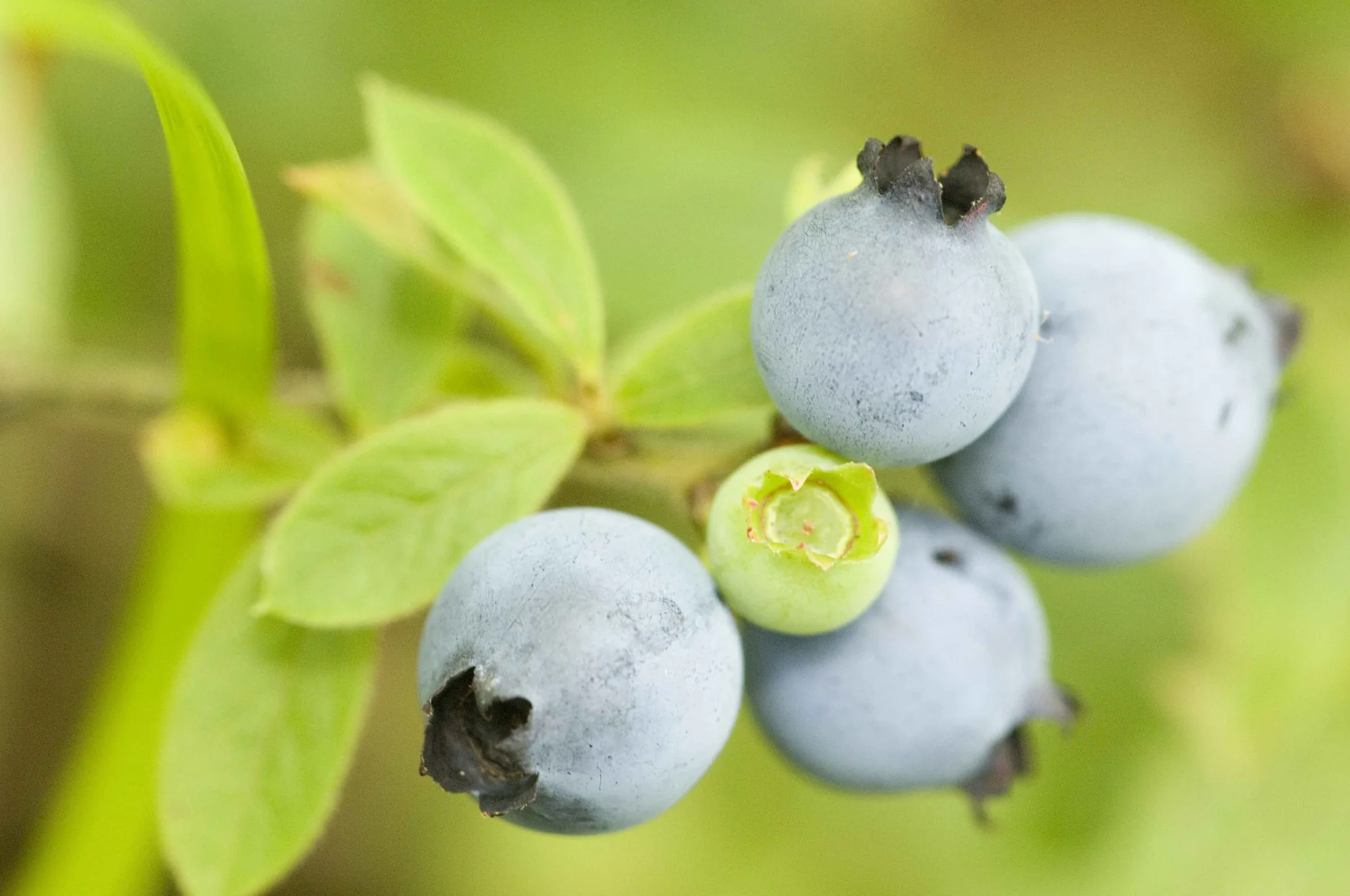
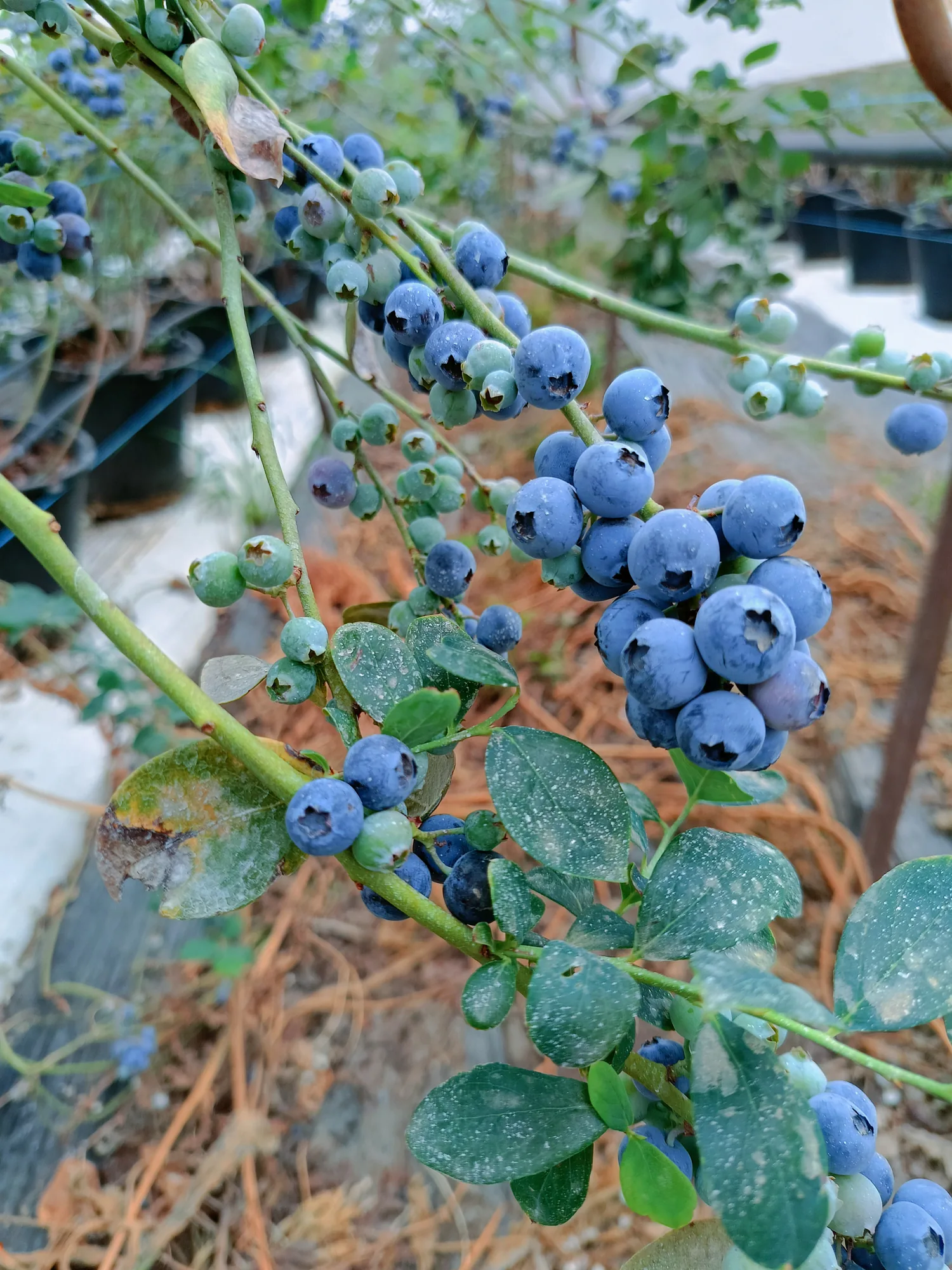
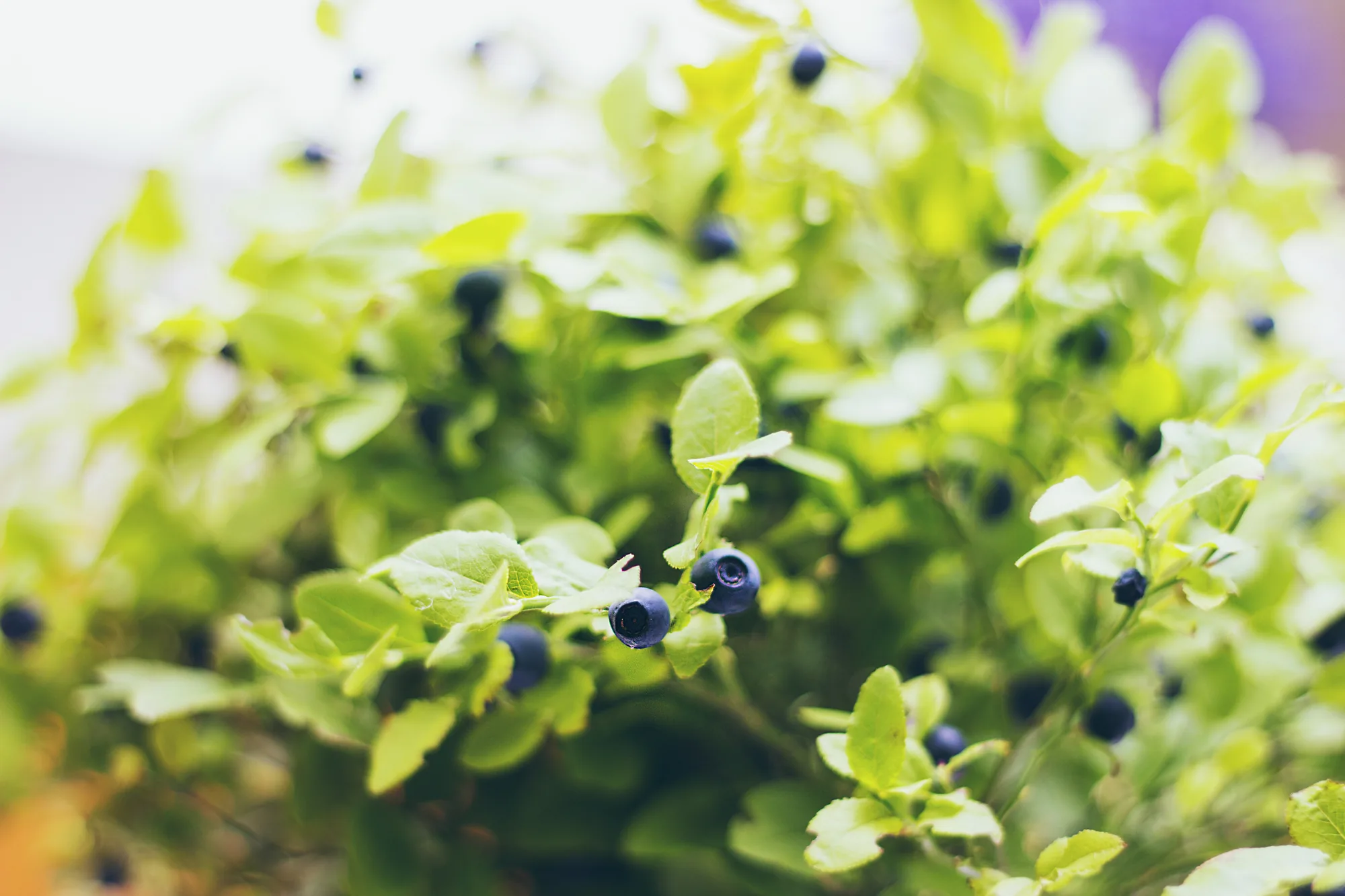
Unripe berries look green or pale green because of chlorophyll. During colour change, pink, reddish and red-purple intermediate stages can be seen. The outer surface of the ripe fruit may read as powdery pale blue-grey, leaden navy, dark blue-purple or almost black, depending on cultivar, light, ripeness and the natural wax layer on it. These tones are neither a single fixed colour nor a sequence every cultivar must follow.
Unripe · green
Transition · pink
Intermediate · red-purple
With wax · blue-grey
Little wax · purple-black
The colour boxes are approximate tone samples prepared for explanation; they are not laboratory colour measurements or a cultivar-by-cultivar photographic comparison.
Do pigments create these colours, or the fruit surface?
Both play a part, but in different roles. The green of early ripening is linked to chlorophyll. As the fruit ripens, chlorophyll declines and anthocyanins associated with red-purple and dark tones accumulate in the skin. Derivatives of malvidin, delphinidin, petunidin, cyanidin and peonidin have been identified in cultivated blueberry; their distribution can vary by cultivar.
Meanwhile the thin natural wax layer (“bloom”) covering the ripe fruit, with its randomly arranged microscopic and nanometric structures, scatters short-wavelength blue and ultraviolet light more strongly. The skin beneath, dark red-purple with pigment, can therefore look bluish-grey from outside. If the wax is rubbed away, the darker, near purple-black surface becomes more visible. This is structural colour; it is not the same as the fruit containing a blue pigment.
A 2024 study in Science Advances showed the structural colour effect of the surface wax; a 2023 study in Plants, People, Planet showed the importance of wax composition, especially β-diketones, in the differences in lightness between cultivars. It is therefore wrong to call a lighter-looking berry riper, more nutritious or better on colour alone.
Are the blueberry and the wild “yaban mersini” the same species?
In Türkiye the name “yaban mersini” can be used for more than one Vaccinium species. A large share of the cultivated fruit sold as blueberry in markets comes from Vaccinium corymbosum and its hybrids. Vaccinium myrtillus (bilberry), which grows wild in the Black Sea region, is a different species. Scientific assessment should therefore look at species and cultivar, not only the common product name.
This species distinction matters particularly for anthocyanin profile, internal fruit colour and product standardisation. This article uses “blueberry”, the name common in markets.
Which cultivars are grown in Türkiye?
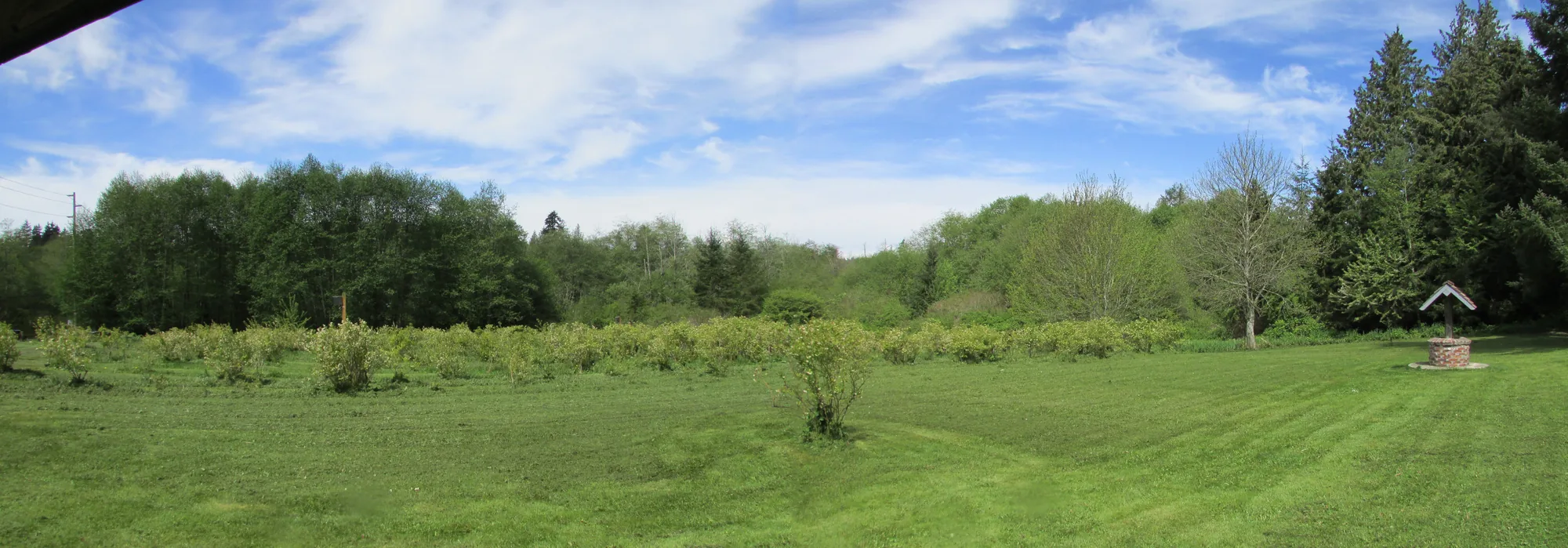
Orchards in Türkiye may include highbush cultivars such as Duke, Bluecrop, Chandler, Brigitta and Liberty, and others depending on the region. In warmer regions, southern highbush groups with lower chilling needs are also considered.
A cultivar is not chosen from a catalogue photo. Winter chilling need, spring frost, summer heat, fruit firmness, harvest window and target market must be reviewed together.
Why can imported blueberries look larger, and why do local ones stay small?
“Imported is big, local is small” is not a scientific rule. Choosing large-fruited cultivars, successful pollination at flowering, correct crop load, pruning, irrigation and commercial sizing can all increase the appearance of large fruit. Strict calibre grading in export chains also makes a difference.
Large fruit can be produced in Türkiye too, and imported fruit is not always larger or more nutritious. Fruit diameter alone is no proof of superior vitamin C, total phenolics or anthocyanins.